


Life is an adventure and things can change quickly or unexpectedly.
It is essential for all of us to think through what would happen with our worldly possessions after we are gone- regardless of how much wealth we have.
Estate planning matters for a few core reasons:
- Protecting people who depend on you
- Handling incapacity, not just death
- Reducing family conflict
- Simplifying the process once we're gone
One question that often prevents individuals and families from creating their estate plan is: Wills vs. Trusts- which one do I actually need? While some might think they can be used interchangeably, they really aren’t. Learning the difference now will help you avoid headaches later.
What Is a Will?
So, what is a will? To put it simply, it is a legal document that spells out what happens to your stuff after you die. It only comes into play once you pass, and it outlines what you want after you are gone. Some key things a will can do include:
- Name guardians for minor children
- Direct how your assets are distributed
- Name an executor to carry out your wishes
Think of it as a list of instructions for those you leave behind.
What Is a Trust?
A trust, on the other hand, is a legal arrangement where you transfer assets to a seperate legal entity for a trustee to manage on behalf of your beneficiaries.
A person does not have to pass away for a trust to activate. In fact, many trusts take effect the moment they are created, not after death.
Trusts are used to:
- Help your estate avoid probate
- Control how and when assets are distributed over time
- Protect beneficiaries (e.g., children, individuals with special needs)
- Plan for incapacity—if you're unable to make decisions, a trust keeps things moving
Some individuals may think that they may not have enough money, but a trust can be helpful to many who are not typically considered ultra-wealthy. If you have a home, retirement accounts, or dependents, a trust may be worth considering.
Key Differences at a Glance
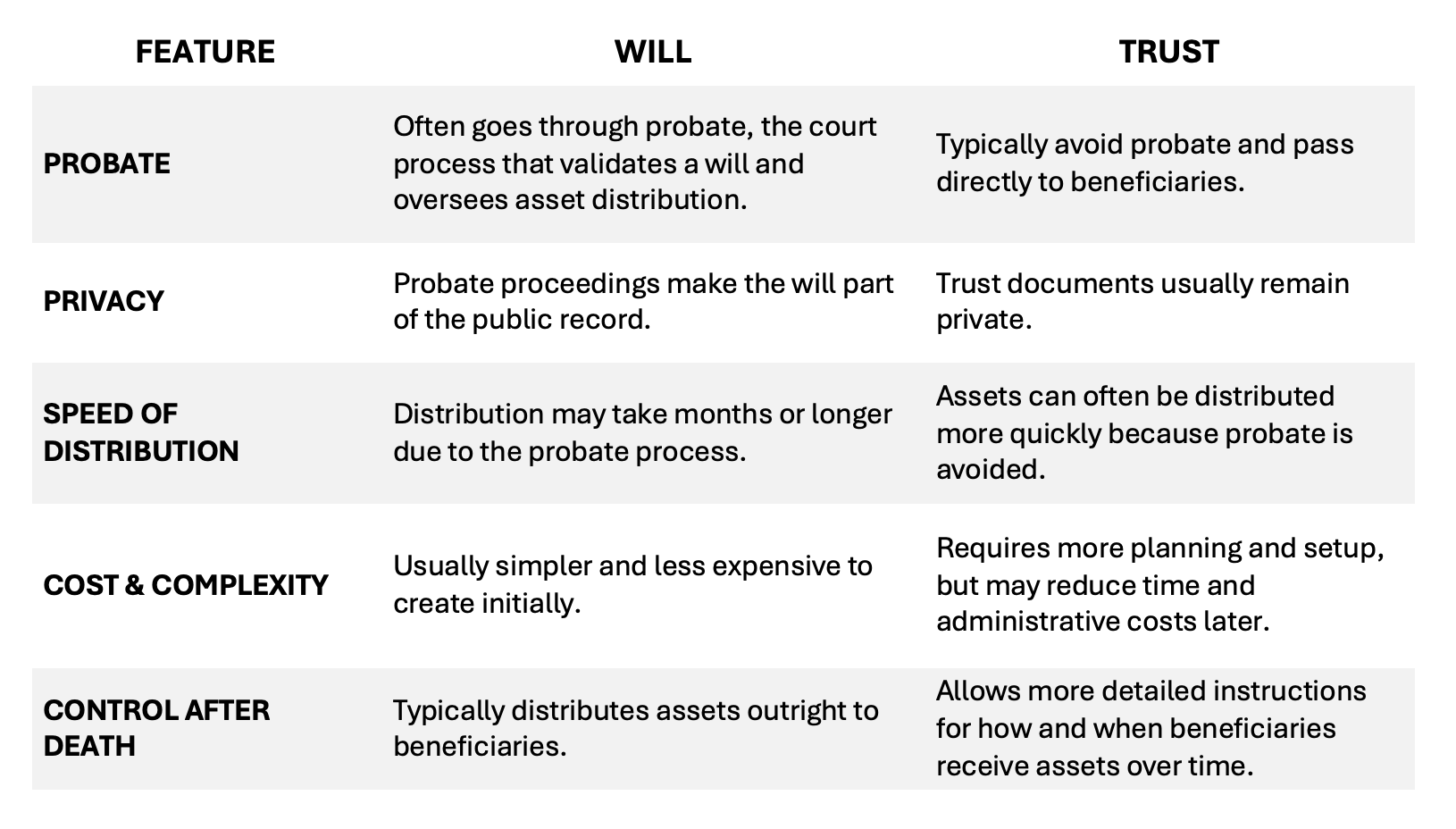
Do You Need One, or Both?
You may think you can only have either a will OR a trust, but estate planning often includes both. Think of it this way- everyone should have a will in place, but not everyone who has a will needs a trust. A trust may hold and distribute major assets efficiently, but a will still addresses important items that a trust cannot. Many people also create a pour-over will, which directs any assets not placed in the trust during life into the trust after death.
When deciding if you need a will or trust, it may be best to ask: What circumstances should my estate plan account for?
Situations that often benefit from a layered estate plan include:
- minor children
- home ownership
- blended families
- business ownership
- significant investment assets
Estate planning is less about choosing a single tool and more about building the right structure for your situation.
A Note About Probate
Probate is the court process of officially transferring your stuff after you die. When you pass away, someone has to make sure your assets go to the right people and your debts get paid. Probate is the legal system set up to supervise that process.
Probate is not a "bad" thing that you should try to avoid; everyone's estate goes through probate after we die. Having a will and/or trust in place through an estate plan will help to ensure that probate goes smoothly, efficiently and reduce associated costs.
Conclusion
Wills and trusts are both important tools in estate planning, but they serve different roles. A will takes effect after death and directs how assets are distributed through probate. A trust can operate during your lifetime, help assets bypass probate, and provide more control over how assets are managed and distributed.
For many people, the best estate plan uses both tools together. The goal is not simply having documents in place, but to be sure the people you care about have clear guidance and support if something happens.
If you have not reviewed your estate plan recently, it may be worth it for us to have that conversation. As your trusted advisor, we can help you learn more and build a plan that reflects your family, your assets, and your priorities.
FAQ
Do I need a will if I have a trust?
Often yes. A will can name guardians for minor children and direct remaining assets into the trust through a pour-over provision.
What happens if I die without a will or trust?
Your estate will be distributed according to your state’s intestacy laws, and a court will oversee the administration of the estate.
Are trusts only for wealthy families?
No. Trusts are commonly used by families with a variety of asset levels to help simplify asset transfers and provide structure for beneficiaries.
Summit Wealth Group is a registered investment adviser. The information provided herein is for informational and educational purposes only and does not constitute legal advice. Nothing contained in any communication, correspondence, report, or other material prepared or distributed by Summit Wealth Group should be construed as legal advice or as the formation of an attorney-client relationship. Summit Wealth Group does not provide legal advice, legal opinions, or legal services of any kind. Clients and prospective clients with questions regarding their specific legal situation, rights, or obligations are strongly encouraged to consult a licensed attorney in their jurisdiction.